
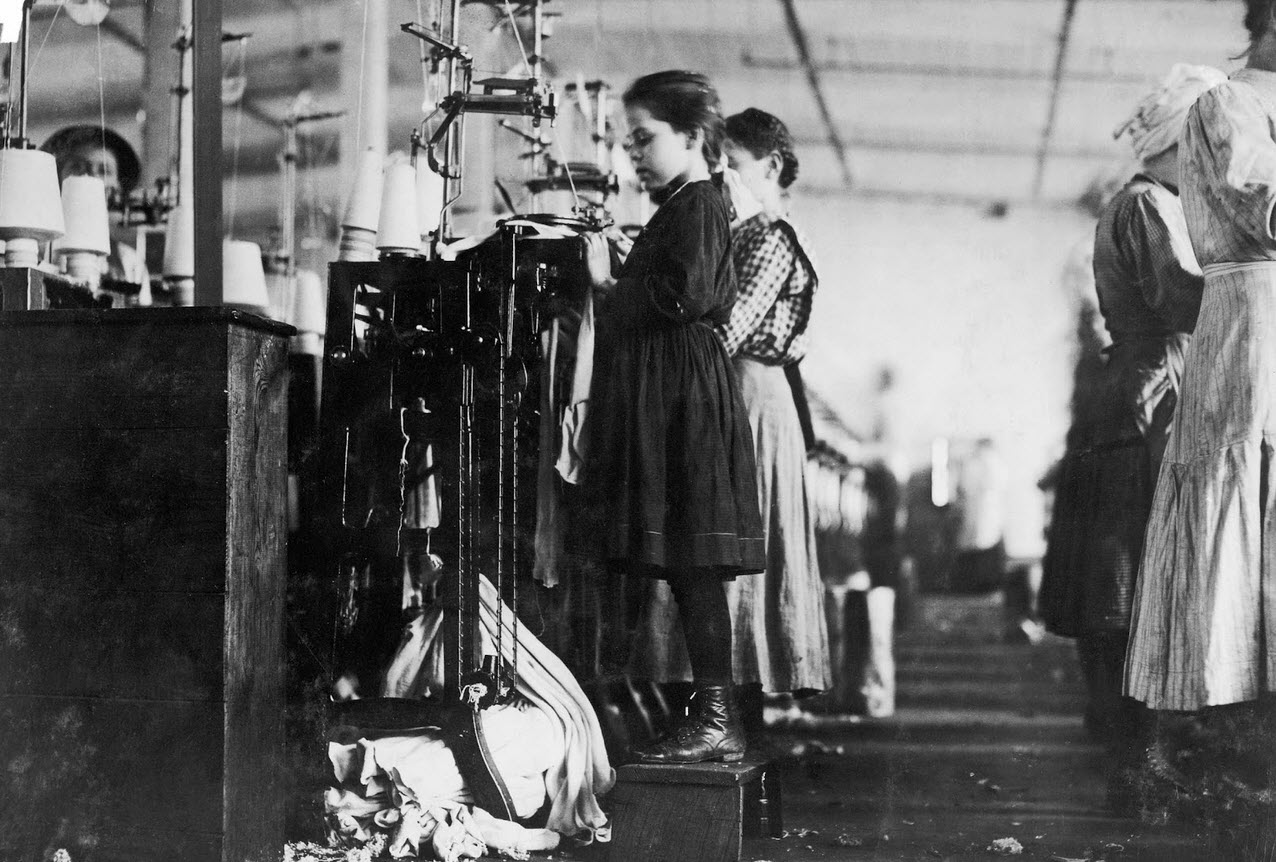
A little girl works at a knitting mill at the Louden Hosiery Mills in Loudon, Tennesseem 1910. She is so young and small that she has to stand on a stool in order to reach her machine, yet she is doing the same work as the adults next to her.
When the United States began to industrialize, factory owners made extensive use of child labour. Children worked in many factories, but were especially common in the textile mills. Families in mill towns often depended on the income that their children brought in to make ends meet. It was not unusual for eight year olds to go to work in factories.
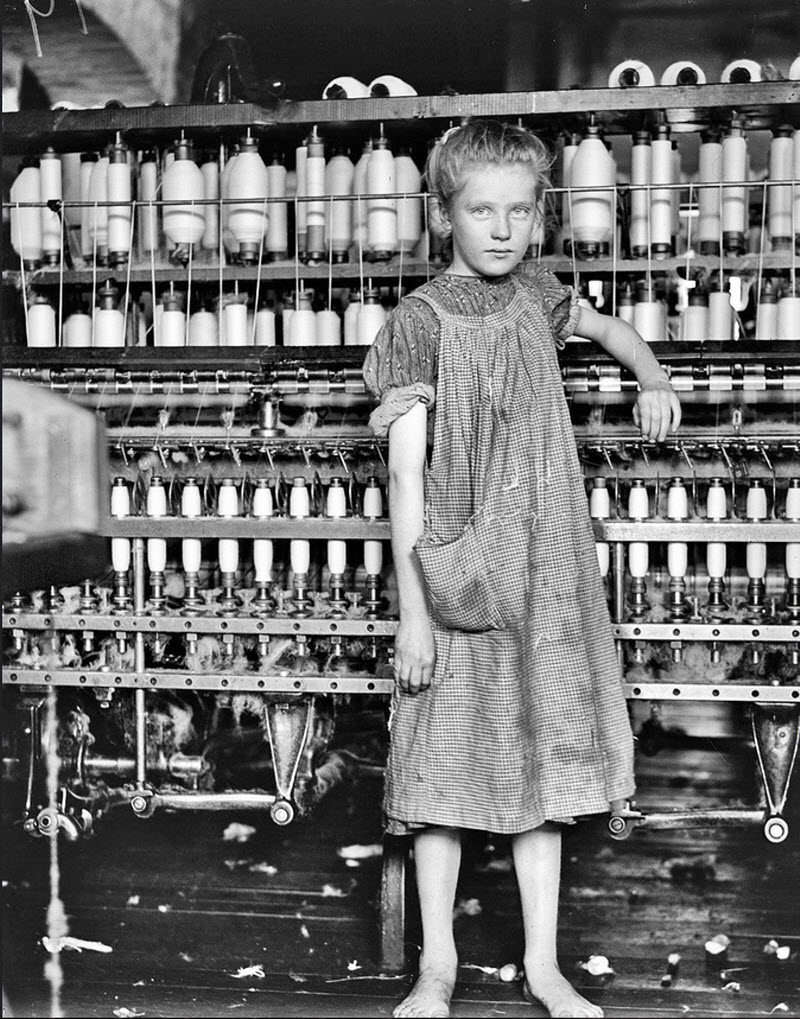
Addie Card – The Girl in the Photograph
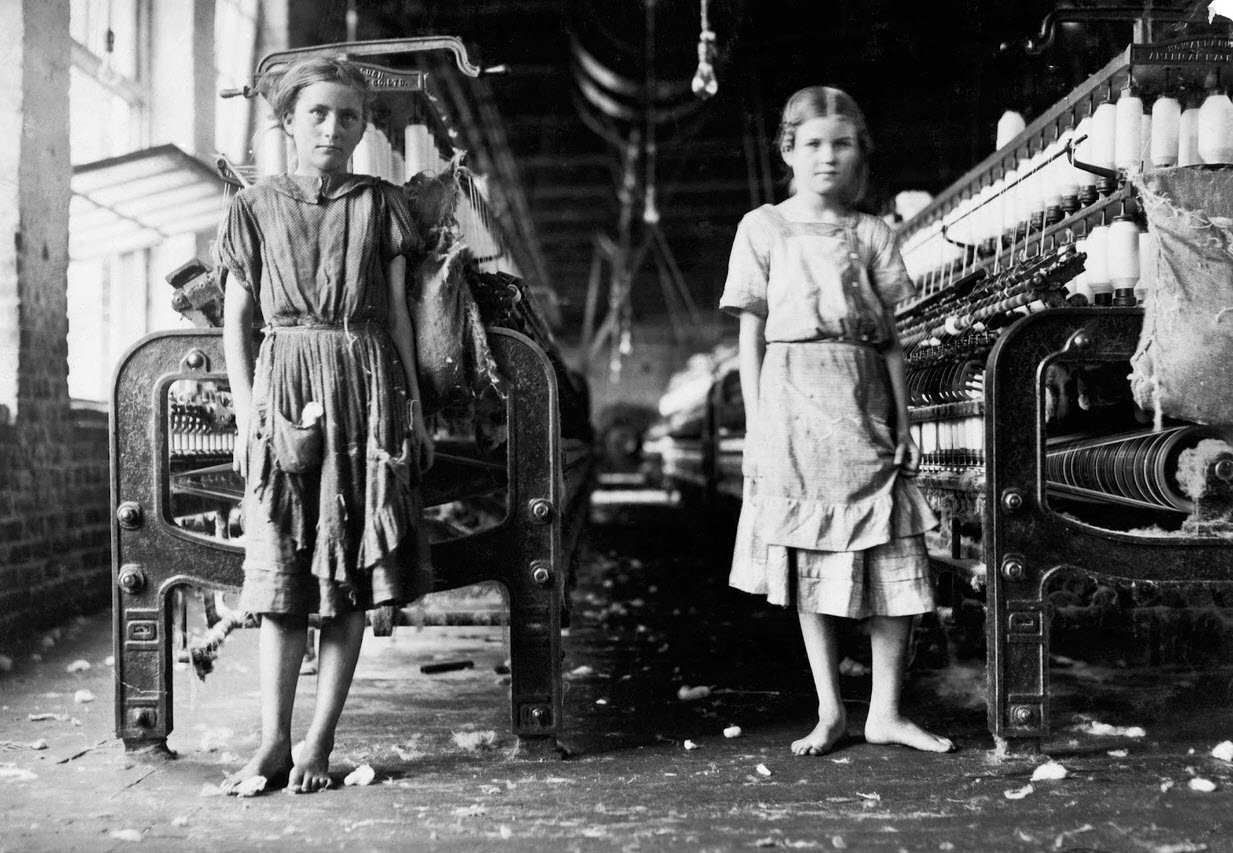
The girl in the first picture looks well fed and well dressed. But she was not typical of the average child worker. The picture above of Addie Card, 12 years old, in a ragged stained dress and barefoot is more representative of what child labor really meant.
Below is a close up of poor Addie’s care worn face. She is famous, having appeared in thousands of publications and on thousands of websites. I wondered what happened to her and if she had a good life in spite of the relentless hard work. As it turns out, Addie Card’s life was difficult. She married twice and her first marriage ended in divorce. She lost custody of her first child, who was raised by an aunt. A person by the name of Joe Manning has done a great job of tracking down what happened to little Addie, as well as many of the other children featured in Hine’s photography of child workers.
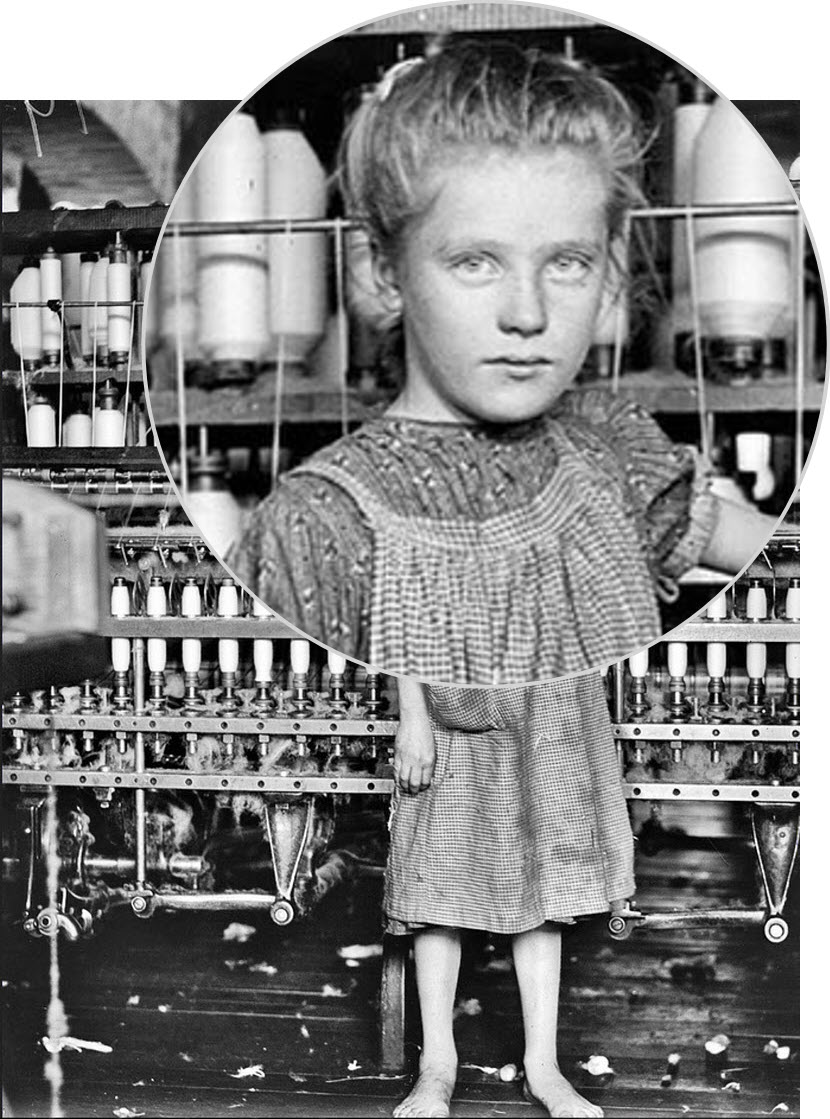
But who are we to say whether Addie’s life was happy and fulfilling or not. It could have been worse, in the circumstances. Despite her poverty and life of hard work, Addie escaped the factory without being maimed or injured. She was able to marry and have children; she lived into old age. This update on Addie’s life reminds us that photographs capture only a brief moment in time. The people in the photo move on, they age, they have lives that extend beyond the confines of this photograph and this website.
Lewis Hine and His Photographs
The photos in this article were all taken by Lewis Hine, a photographer and sociologist who documented working conditions in the early 1900s. Hine was frequently threatened and harassed by factory guards and foremen who were shy of letting the world see what conditions were like inside their factories.
Child Labor Laws
Hine’s photographs shocked a nation and helped spur needed reform. Several attempts were made by advocacy groups as well as Congress to pass laws limiting child labor and setting minimum ages for working in factories. However these measures were not successful as they were struck down by the Supreme Court as unconstitutional.
Abusive child labor practices finally ended, not as a result of reform, but because of the Great Depression which left so many adults unemployed, that out of desperation adults were willing to take the lower paying jobs usually filled by children.
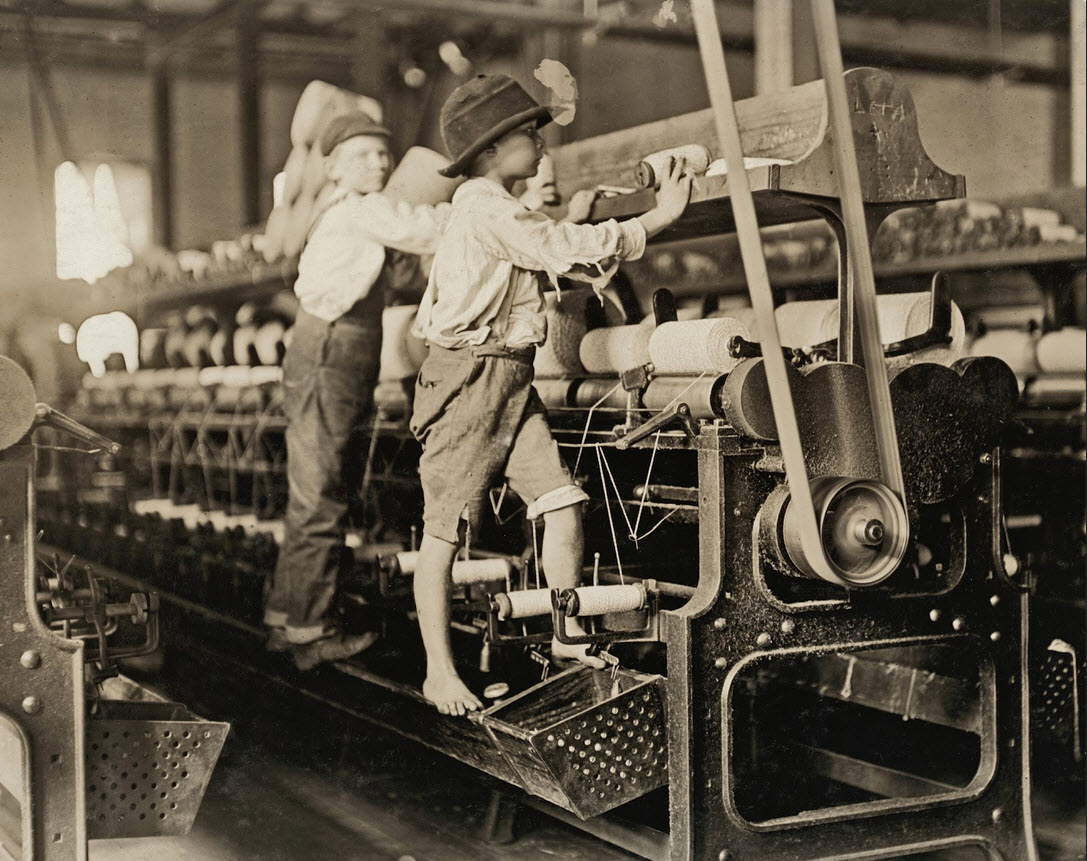
It is interesting to reflect that western nations such as Britain and the United States had lots of children working in factories and even dangerous occupations such as mines, during the early part of the industrial revolution. It was not until the passage of legislation that these horrors were abolished in the US and the rest of the western world. Incredibly, these reforms faced opposition both from industrialists, who feared the loss of cheap labor, and parents who feared the loss of income that their children brought in.
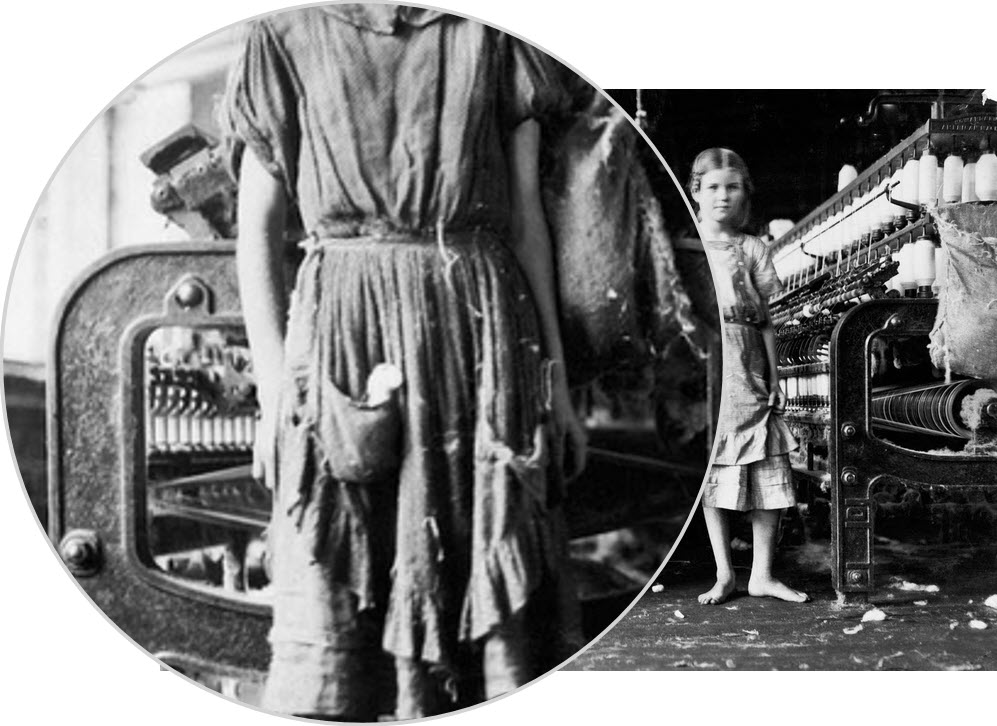
Below is a heart-wrenching magnified view showing the tattered clothing and impoverishment of the little worker on the left:
Factory work meant that children either did not attend school or if they did go to class, it was after a long and exhausting shift so they were too tired to learn and many students just slept at their desks. It seems alien to us in the present day, when there is a strong stigma against children doing any kind of industrial labor. However public attitude was the opposite back then. Instead of campaigning against child labor, parents complained that their children had to wait until they were eight before they could go to work and help support the family.
Fortunately these conditions and attitudes have changed in the West, but they are still the daily norm for millions of children in the developing world.
This article about children working in factories at the beginning of the 20th century was first published on December 3, 2015 and last updated on April 25, 2021.