
What was it like to work on an assembly line at the start of the 20th century?
The assembly line system had revolutionized American industry and greatly increased the productivity of factories. Today, we take this system for granted and we probably associate assembly line production with the streamlined efficient operations of automobile plants or even soft drink bottling plants, which can produce and fully assemble products with amazing rapidity. Modern assembly lines feature efficient robots welding and riveting, or at least skilled workers aided by power tools and labor-saving devices such as motorized carts and cranes to do the heavy lifting.
But this was not always the case. Early production assembly lines were nothing like we know today. They were chaotic, dangerous, claustrophobic, and crowded. Early films from that period give us an idea what it was like to work on the assembly line.
Below is a short film documentary from 1904 which takes us on a tour into this hellish work environment.
The Westninghouse Factory in 1905
As you watch the film, notice how crowded everything is, how hard it must have been for the workers not to bump into each other or get caught in the machinery. There are no safety precautions in place. The men are not wearing any safety equipment such as hard hats or safety glasses.
Still Shots From the Film
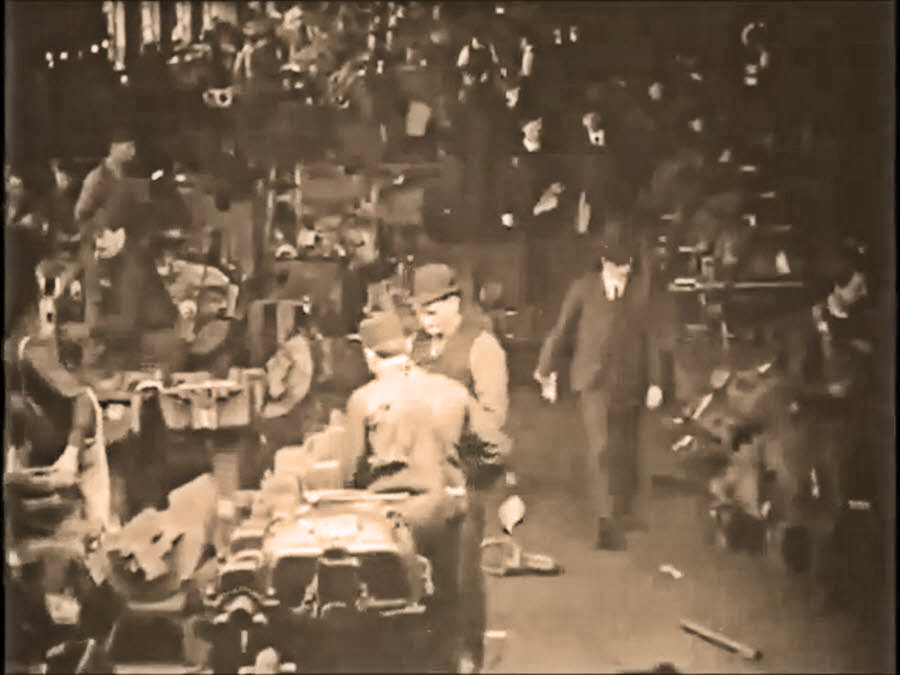
I have selected some screen captures from the film and cleaned up the images as best I could, and then magnified them to show more detail. There are some interesting things to see in this chaotic and busy scene.
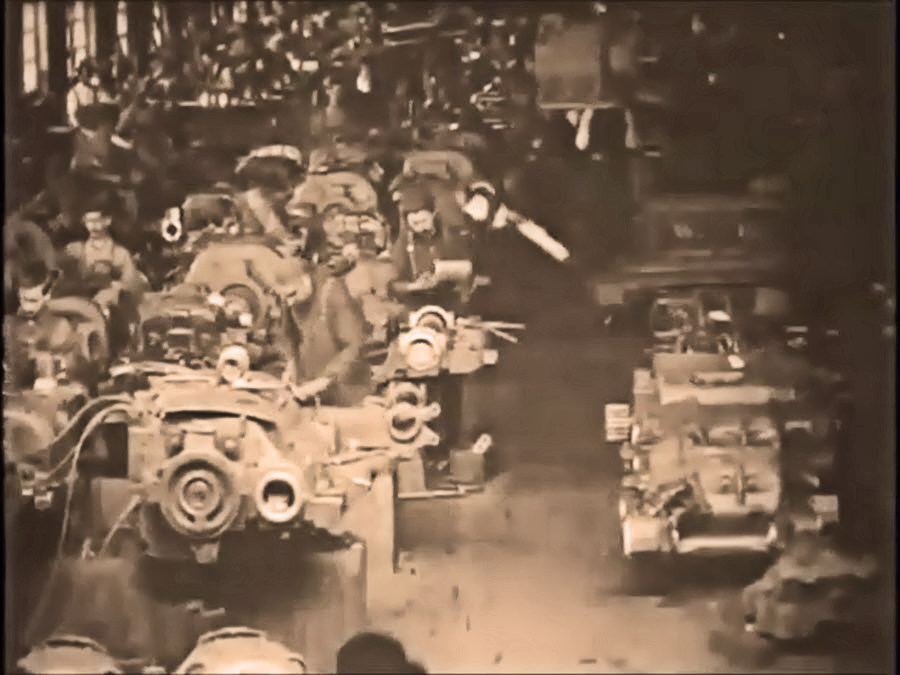
They are a little hard to make out because of the poor lighting and picture quality but if you look closely you can see a number of men crammed in with the massive engines, manually tightening gaskets and screws without power equipment. It must have been backbreaking work.
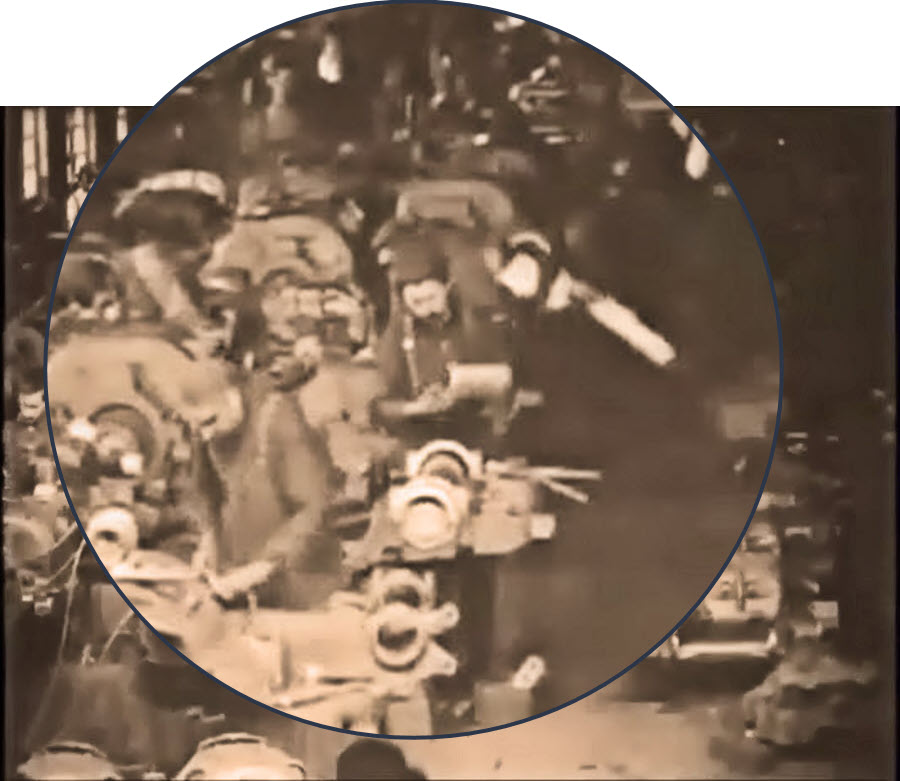
Below is a magnified view of the workers in the foreground, the nameless stars of this early silent film documentary.
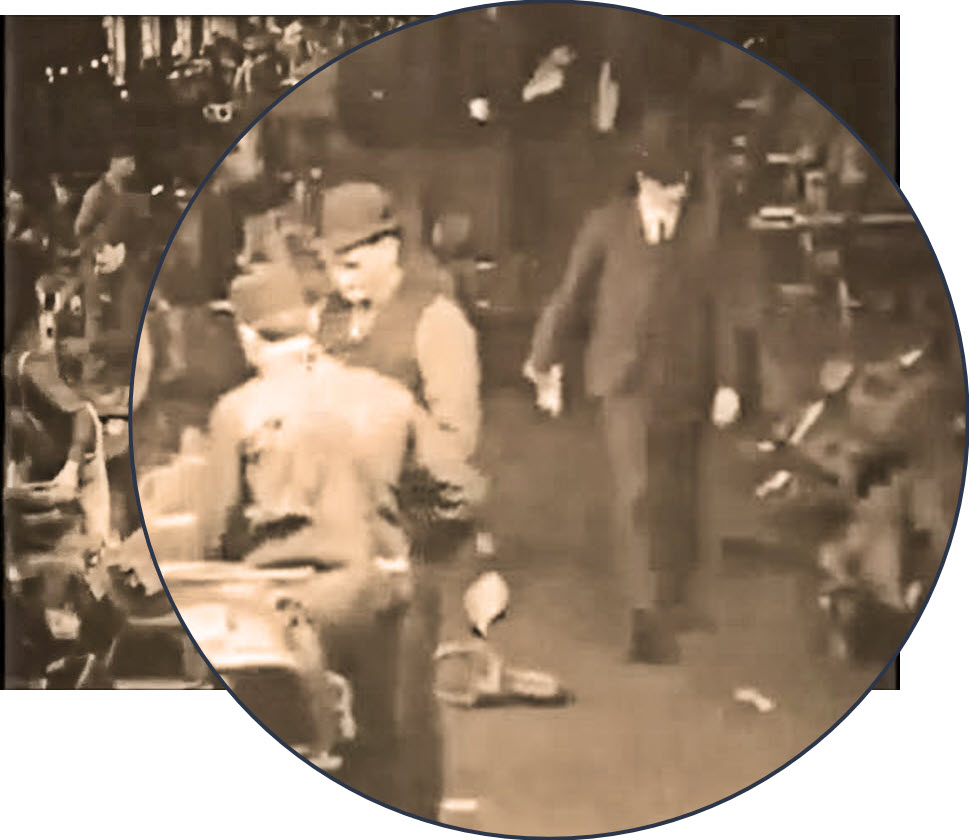
At one point in the film two men wearing suits and hats can be seen strolling through the factory. They are obviously the bosses.
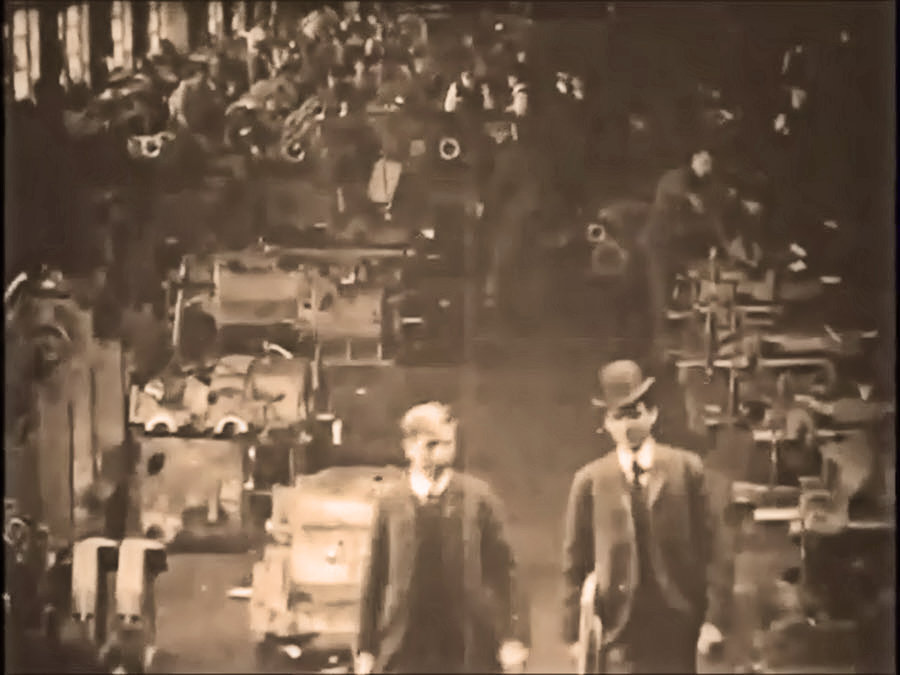
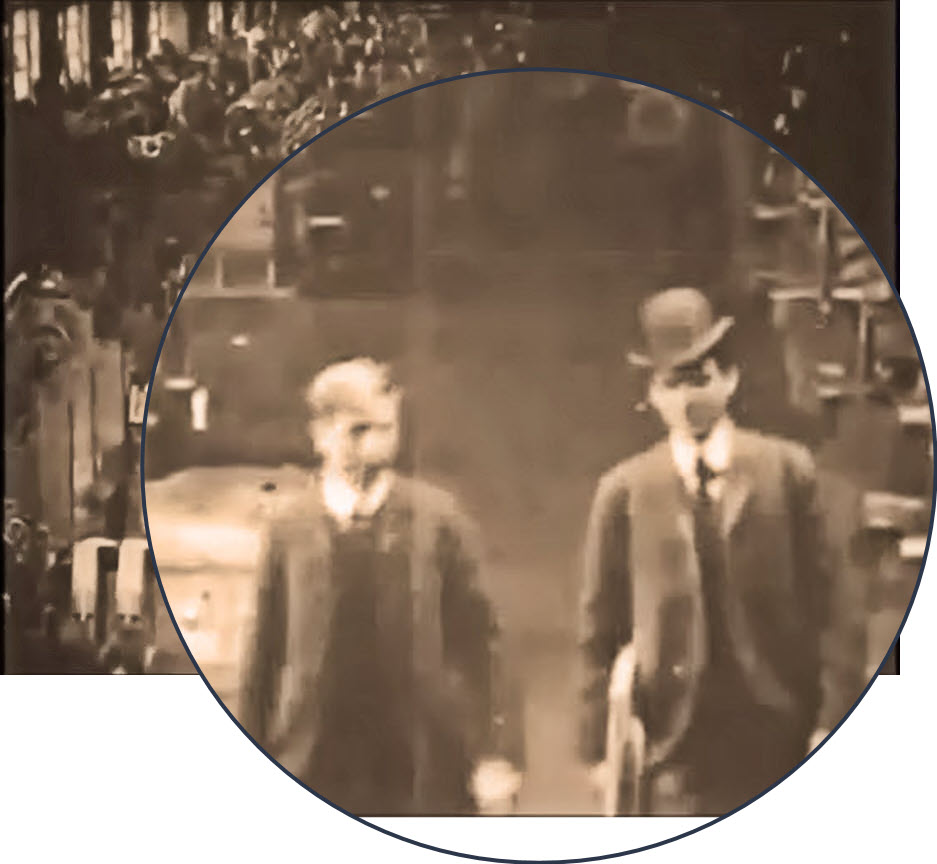
In closeup we can see that the man on the right of the screen has an attache case or file with him. He is wearing a suit and tie with a bowler hat. His companion is bare headed but is also wearing a suit.
Below we some more bosses, but their inspection does not seem to have been aimed at making things safer. You can see a bunch of litter and scattered metal parts on the walkway, a clear safety hazard but everyone nonchalantly ignores it.
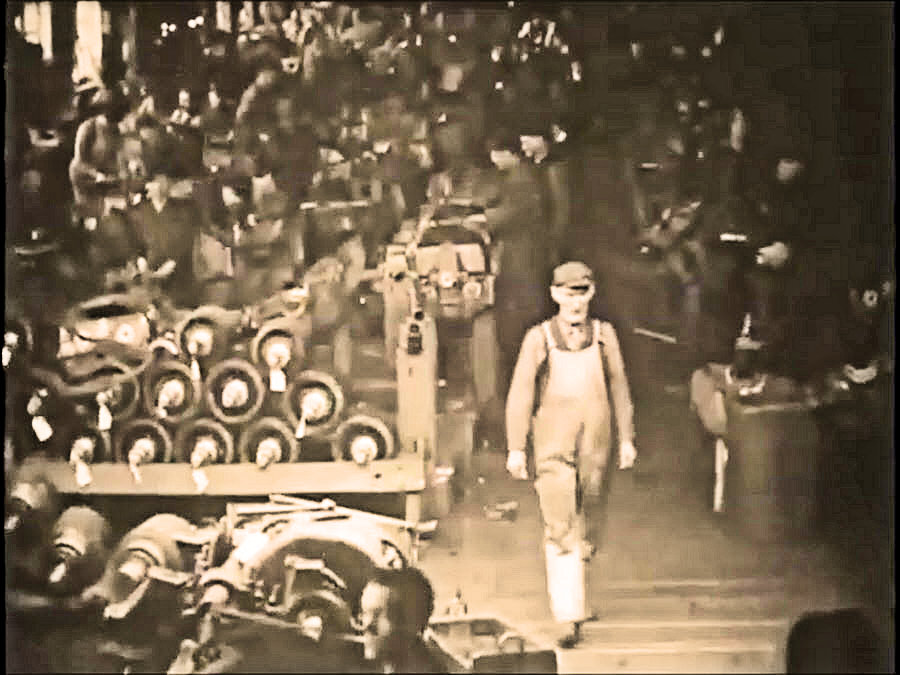
In the photo above you can see a fairly clear shot of an anonymous worker. He appears a bit older. Behind him are lines of other workers, like cogs in a machine, working on the engines. It’s interesting to note that there are no child laborers in this factory even though this was common in other factories at the time.
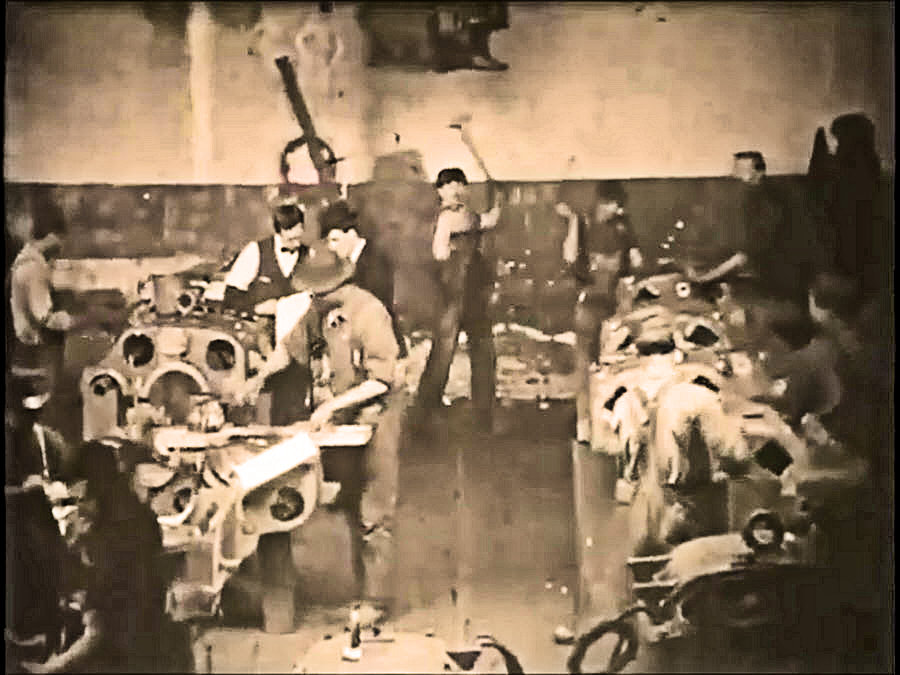
Here is a worker swinging a long hammer, placing everyone in danger. None of the working conditions seem safe by the standards of today. In his book, “The Good Old Days–They Were Terrible!” Otto Bettman noted that the industrialists of the era had made a cynical calculation that it was cheaper to pay for a worker’s funeral – one of the few benefits they offered employees – than to invest in safety equipment or slow down production by being more careful. Thousands of American workers were maimed or killed in preventable industrial accidents.
The Film’s Background
“Panorama View, Street Car Motor Room” is a short documentary shot and directed by Billy Blitzer, a pioneering filmmaker from the silent film era. It is part of a larger series of short documentaries called “Westinghouse Works” (1904), which was added to the National Film Registry in 1998 as being deemed “culturally, historically, or aesthetically significant”. This segment was released on May 2, 1904 by the Biograph Company.
The filmmaker, Gottfried Wilhelm Bitzer (April 21, 1872 – April 29, 1944), more commonly known as Billy Blitzer was an early cinematographer who worked closely with D. W. Griffith.
Blitzer is credited with developing many of the film techniques still in use today including the fade out to close a movie scene, soft focus photography and filming entirely under artificial lighting rather than outside. Some of his techniques, which he would perfect later in his career, are in evidence in this movie and the still shots.
Cinematography by Billy Bitzer
Starring The men of the Westinghouse plant, 1904 – uncredited.
Distributed by Biograph Company
Release date May 2, 1904
Country United States
Running time Under 3 minutes.