
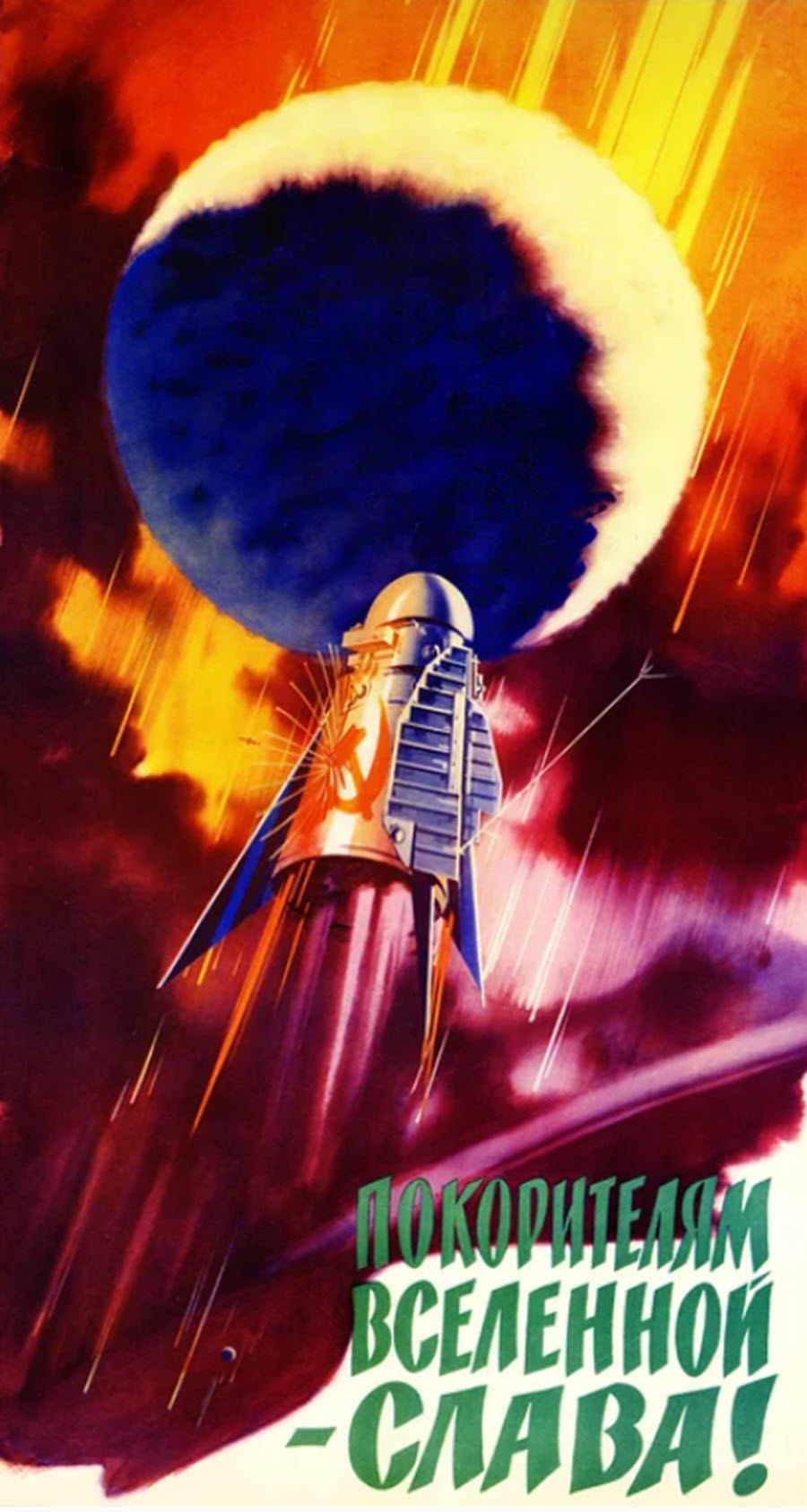
The USSR developed an early lead over the United States in the Space Race, when it launched the Soviet Union successfully launched Sputnik, the first successful orbiting satellite. Many more successes and achievements would follow, including the first man in space, the first spacewalk, the first probe to reach the moon, the first landing of a remote controlled rover.
For the USSR, these achievements in space were a legitimate source of national pride, as well as a propaganda tool. Every Russian success in space was portrayed as proof that the Soviet system was more advanced, more modern, and superior to the West.
Soviet propaganda posters continually extolled the successes of its cosmonauts as proof that a bright future awaited the motherland. For a time, in the 1960s and 70s, it even seemed that the Soviet propaganda might actually be telling the truth for once.
Here is a collection of Soviet propaganda posters from the Space Race between the Americans and the Soviet Union.
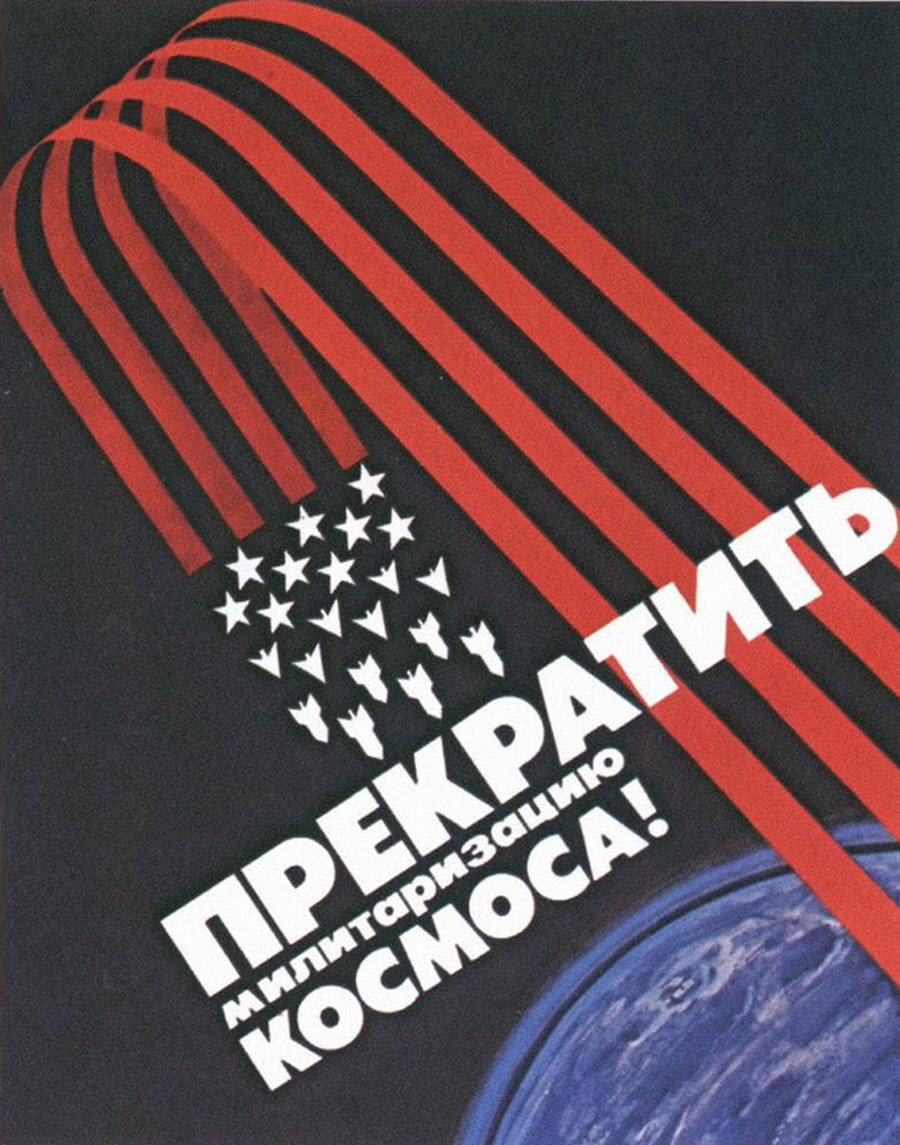
This poster from 1980 opposes the militarization of space, which is still a thorny issue. It was published in the context of the American decision to develop an anti-ballistic missile shield, which could have neutralized the Soviet nuclear deterrence.
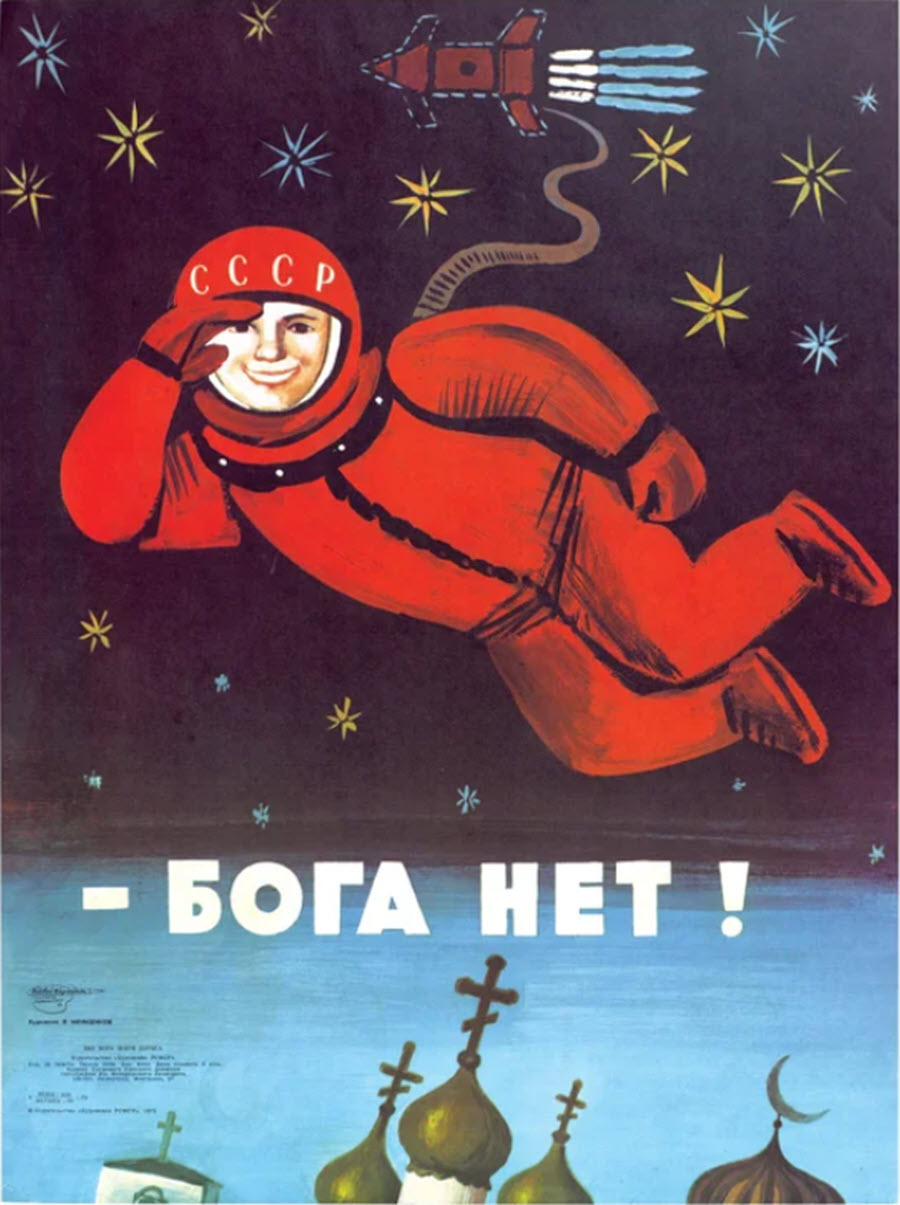
The above poster was published in 1975 and uses the theme of Soviet success in space to push a pro-atheist and anti-religious message. The poster depicts a Soviet astronaut in orbit around the earth, ironically looking for God and not finding Him. The tagline emphatically declares: “”There is no God!” as he floats high above, and symbolically superior to the churches on the ground. The Soviets really were godless commies.
The poster echoes the sentiment expressed by Cosmonaut Gherman Titov, the second Russian cosmonaut to orbit the earth. He had traveled to the United States in 1962 on a goodwill/propaganda tour and had told audiences that he had seen no gods or angels in space, but that he believed in mankind’s power of reason.
Other Soviet propaganda had also used mankind’s tentative first steps into the mysteries of the cosmos to push an atheist agenda. After Yuri Gagarin became the first man to go into space in 1961, the Soviet newspaper Izvestia wrote:
“Yuri Gagarin really has given a terrible headache to believers! He flew right through the heavenly mansions and did not run into anyone: neither the Almighty, nor the Archangel Gabriel, nor the angels of heaven. It seems, then, that heaven is empty!“
Posters such as these may not persuade but they say a lot about the society that produces them.
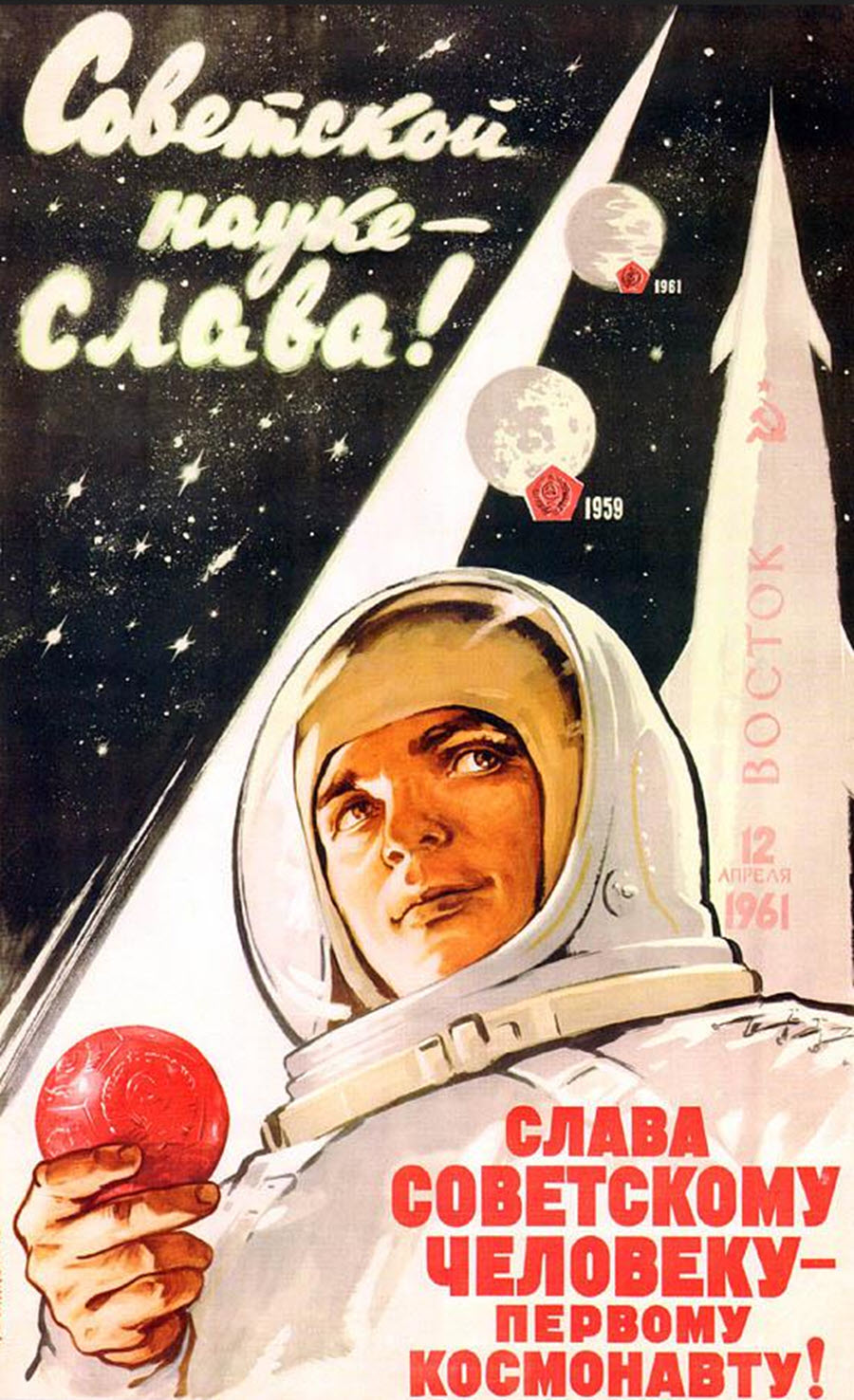
he poster reads: “Glory to Soviet science! Glory to the Soviet man – the first cosmonaut! Vostok, April 12, 1961” Gagarin is holding a Luna-2 Pennant, which was a pennant bearing the symbol of the USSR dropped by the Luna-2 probe onto the moon’s surface, just before the probe impacted the moon in 1959. Luna-2 was the first probe to reach the moon and marked another success by the Soviets in the Space Race.
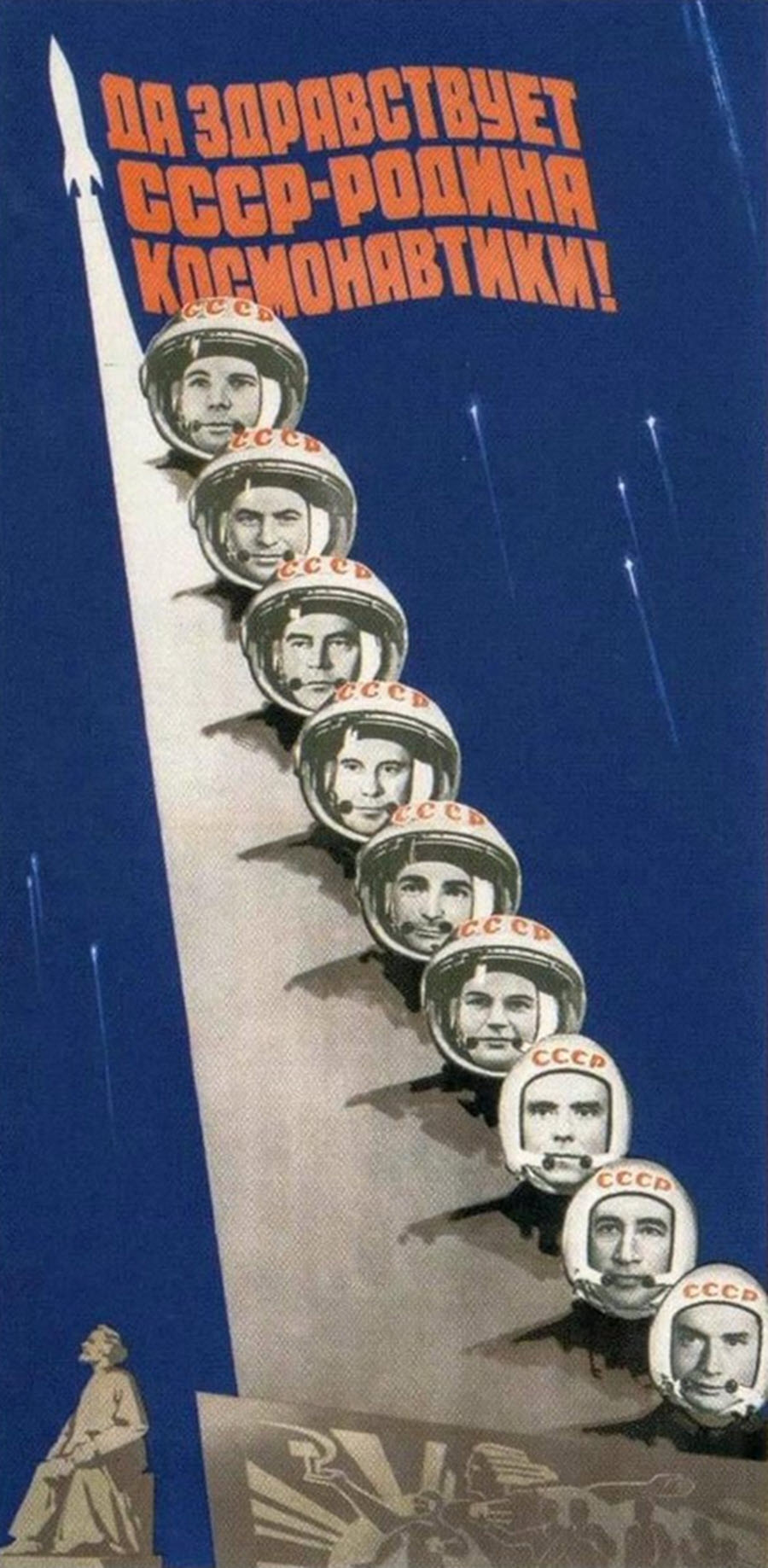
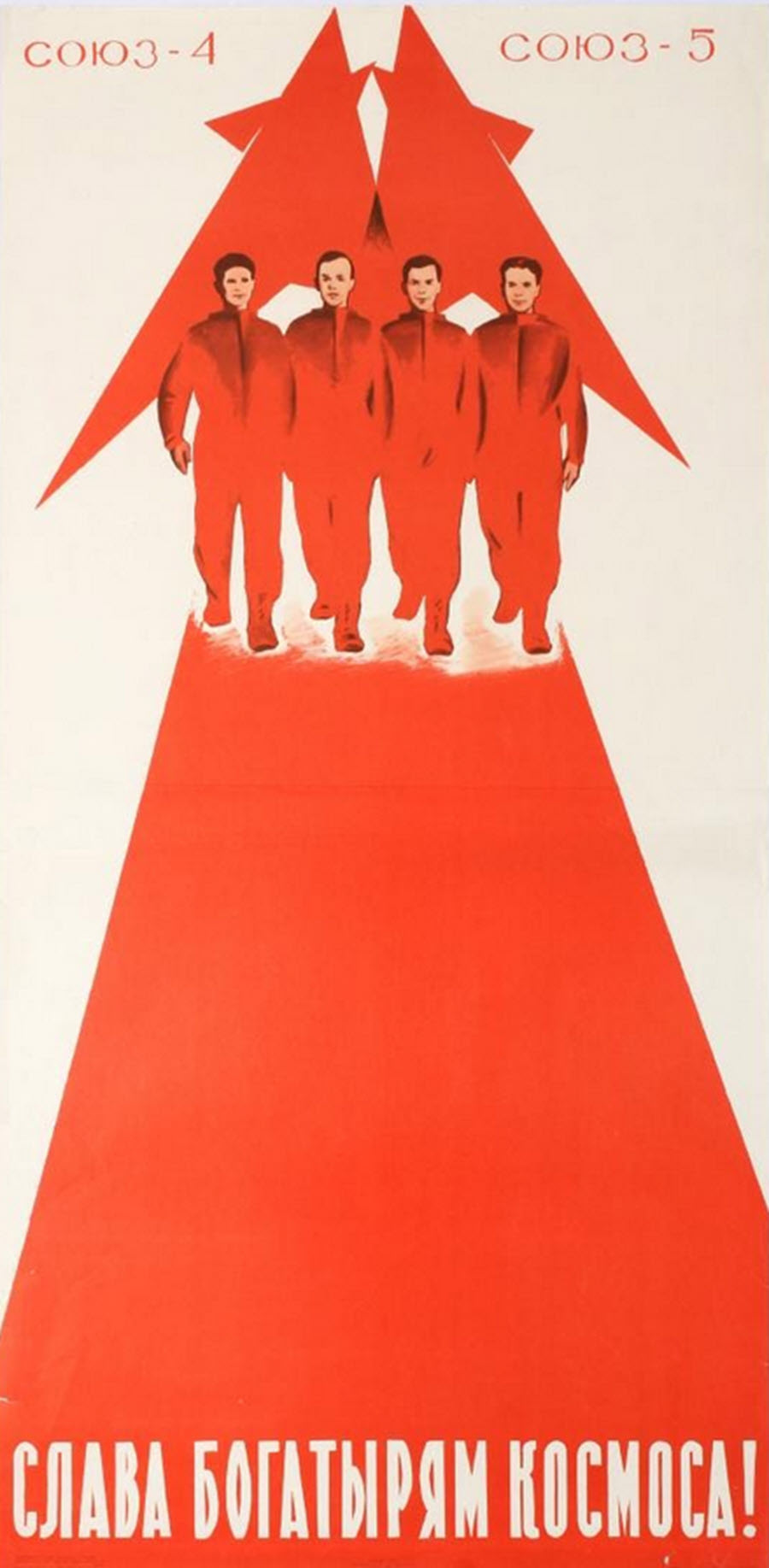
Various early Russian cosmonauts are depicted.
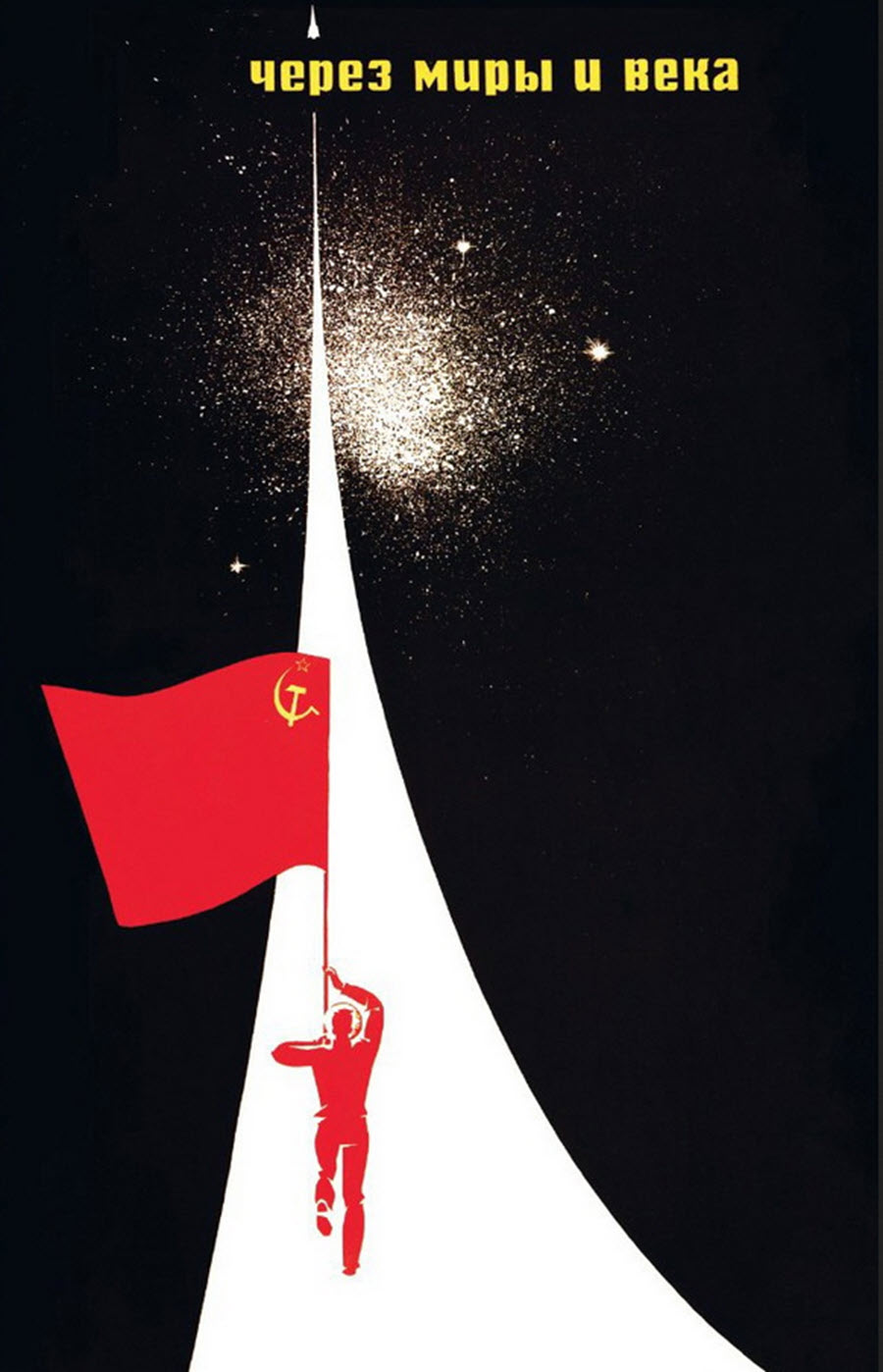
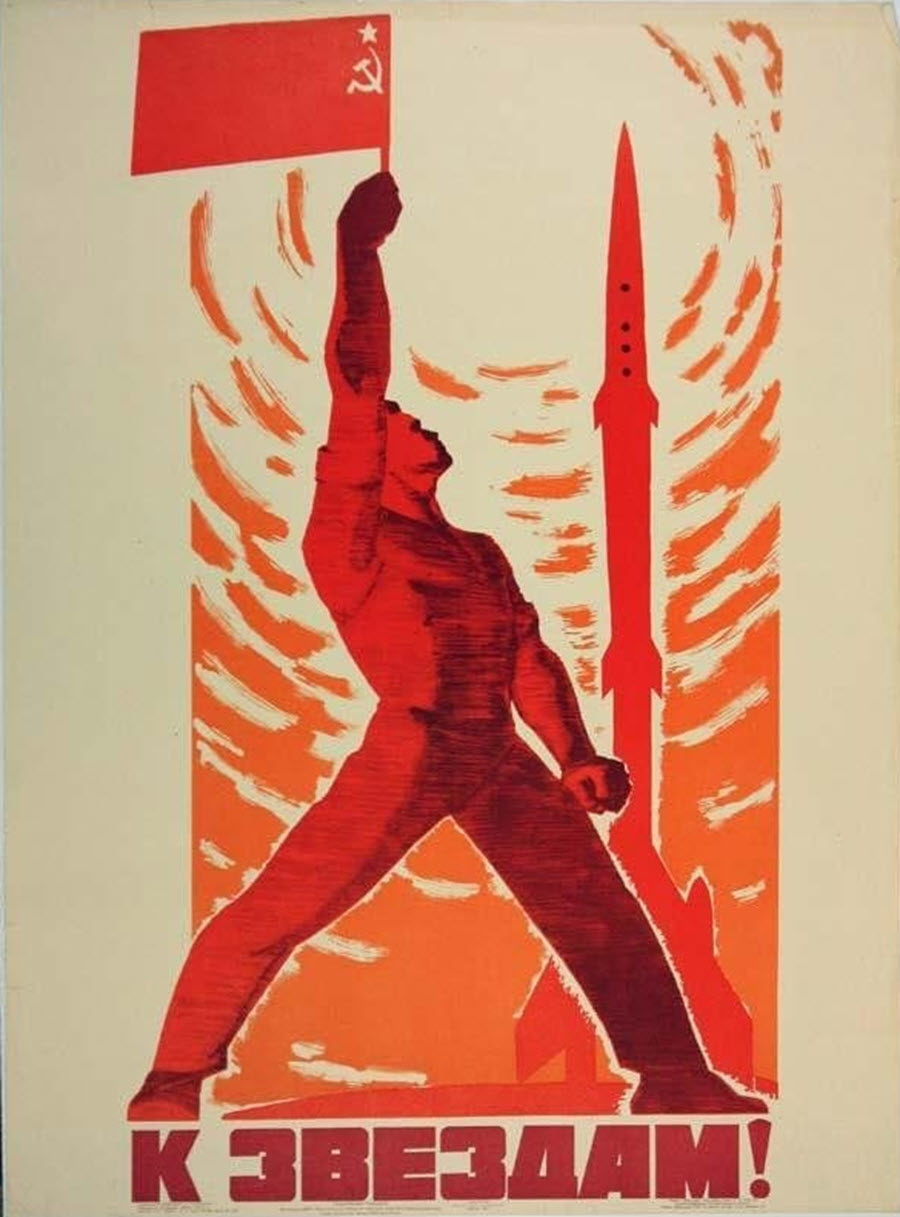
This retro-futuristic poster makes the link between success in space and progress, depicting a red-colored man, in a subtle reference to Communism, running up an incline towards the stars, while holding a Soviet flag.
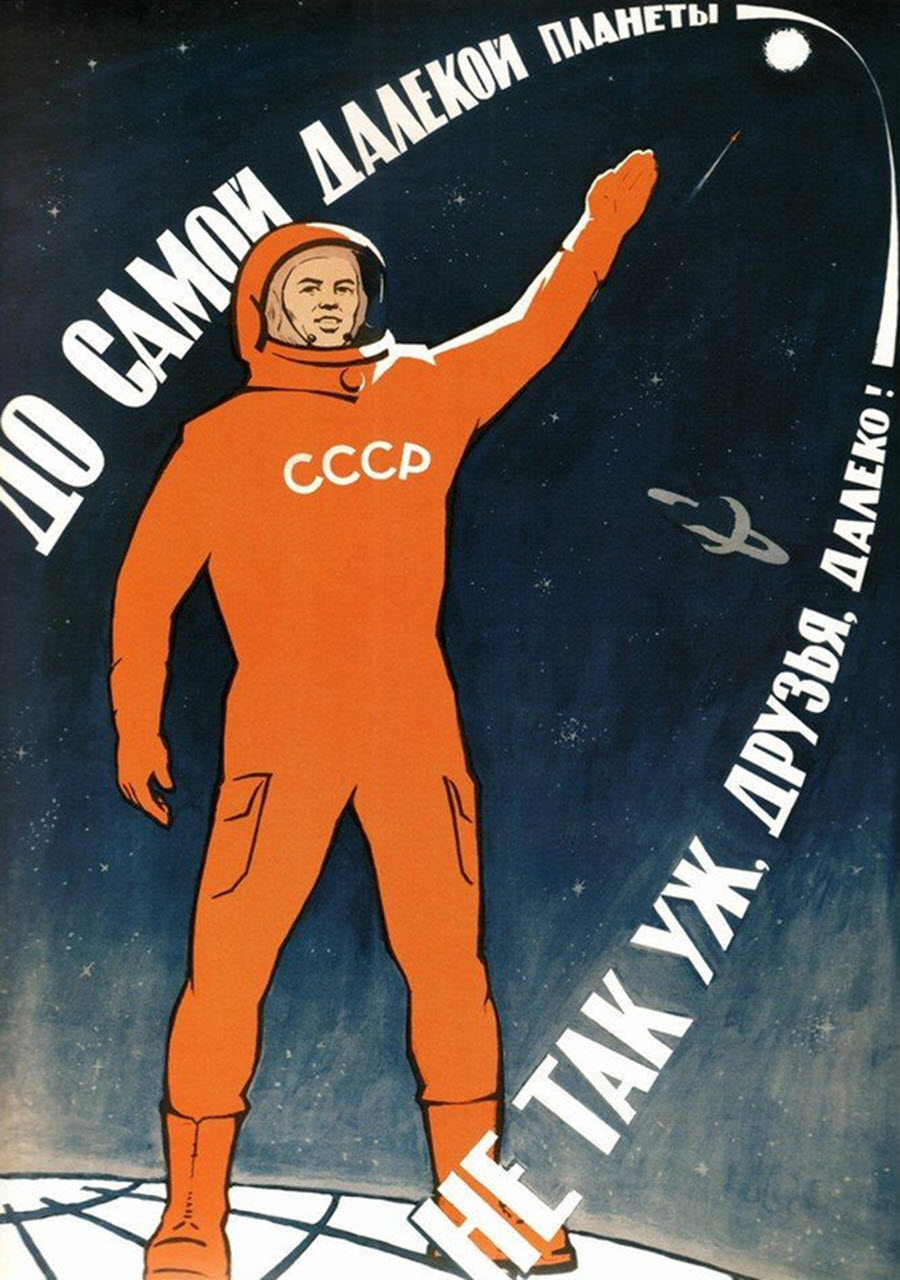
Published just after the stunning success of having put the first man into space, this Soviet poster hopefully claims that now all of the planets are withing reach of the Communist system.
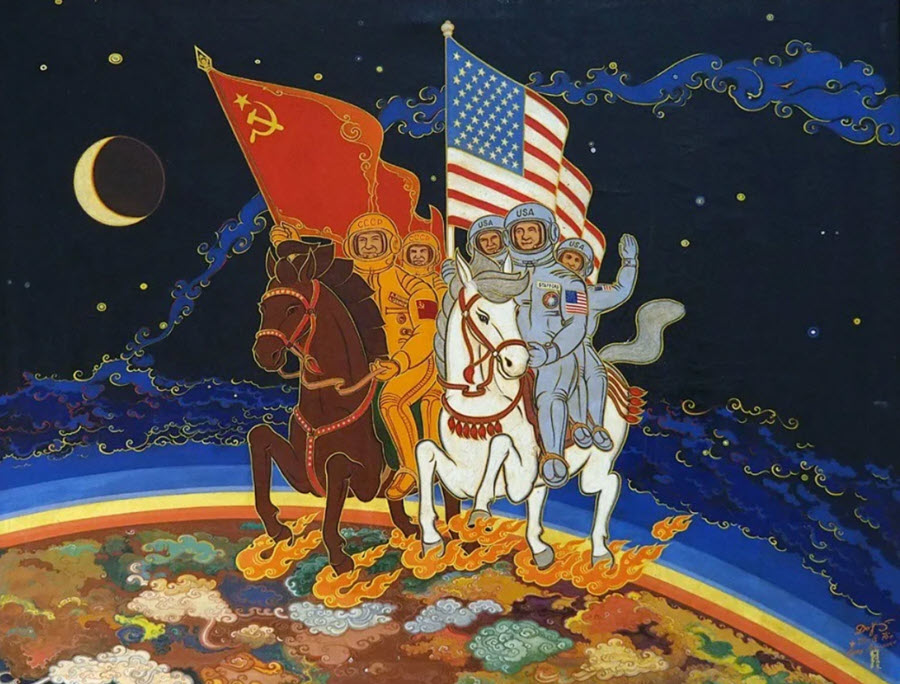
This poster depicts the American and Soviet Space Race as a literal horse race with each country riding sky horses. It was published to commemorate a rare instance of cooperation between the USSR and the USA when and American and a Soviet spacecraft successfully docked with each other for the first time.
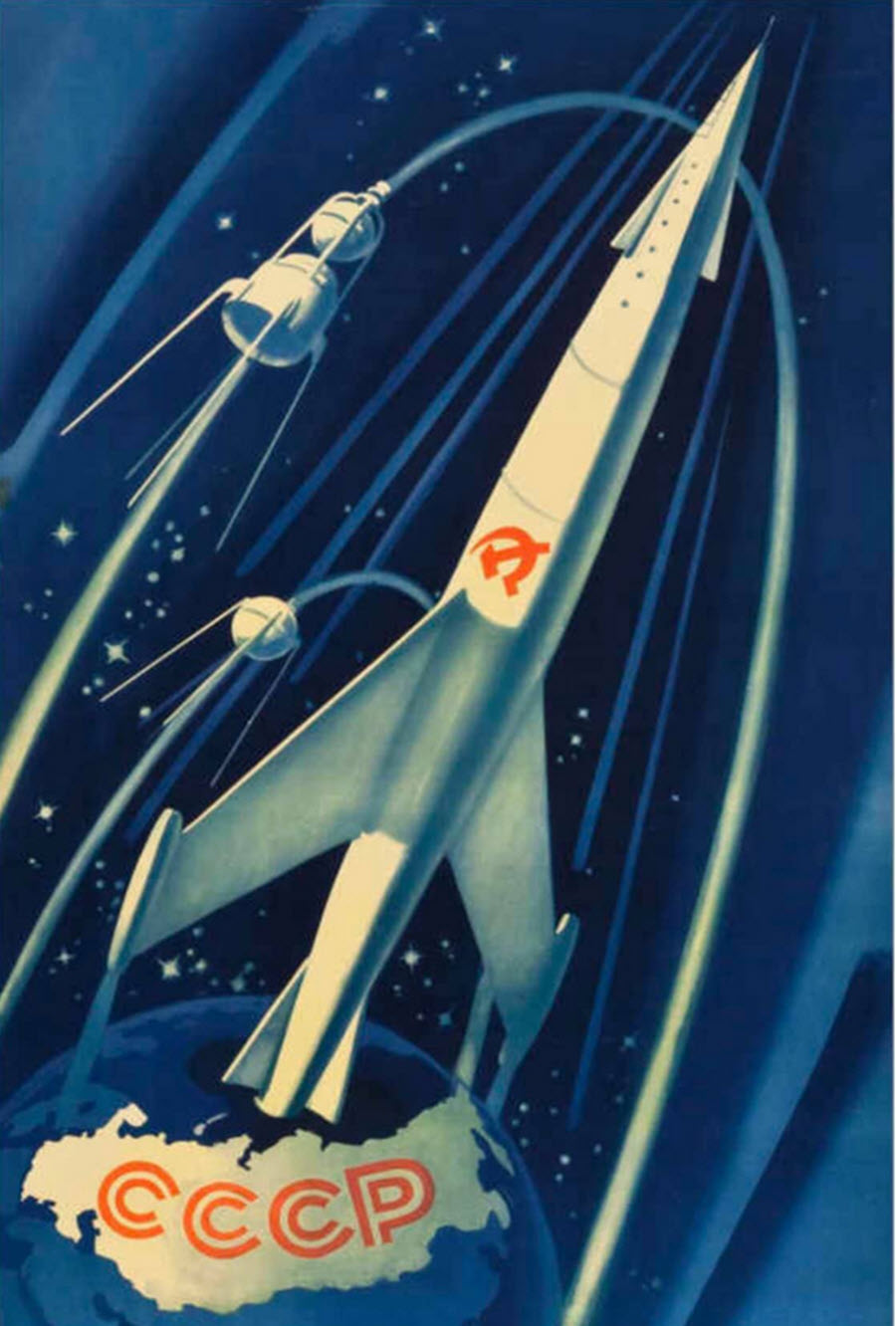
This not too subtle poster uses Freudian imagery to equate rockets with Russian virility and power, asserting dominance over space.
The Soviet Union is gone now and the Space Race is unfortunately over. There is no longer a healthy rivalry between nations to spur a test of wills and daring. Budgets have been reallocated to other priorities. The courageous astronauts blazing new trails to space and other planets have been replaced by robots and space probes. We have not set foot on the moon in over 50 years. While no one should miss the Soviet Union and its evil empire, we can look back nostalgically at these posters and remember a time when the stars seemed within reach.